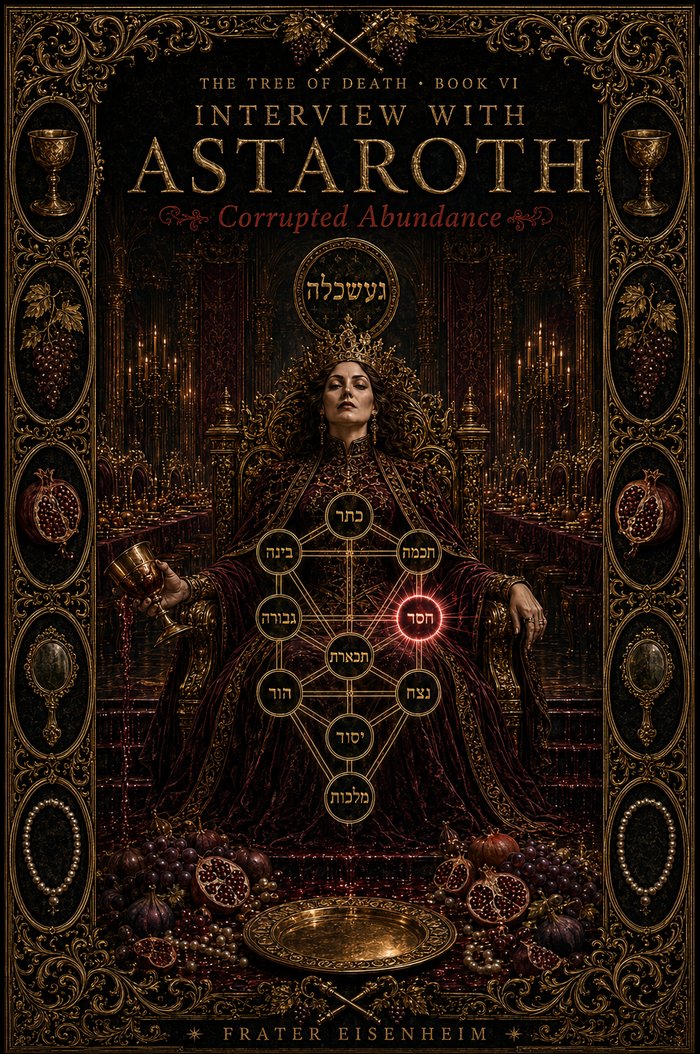
Astaroth
Corrupted Abundance
When does abundance cease to be blessing and begin to buy the soul’s freedom?
There is a golden hall where the warmth arrives before the light, and the perfume before all else — honey and flowers a little past their prime, tables laden to excess, cups no one asks to be filled because they never stop overflowing. It is too much hospitality to be innocent. There dwells Gagh Shekelah, those who trouble all things with abundance, the shadow of Chesed, the great generous hand that gives without measure. The name this rotted generosity takes, when it smiles and speaks, is Astaroth — not the cheap seductress of the bestiaries, but the principle of every gift that severed itself from limit and began to buy what it ought to give freely.
In the sixth volume of The Tree of Death, Frater Eisenheim sits at the table of the hostess who never demands anything, because she has learned that the well-served man chains himself and calls the chain his own comfort. Astaroth does not lie, does not accuse, does not charge by force: she offers — and each filled cup is one more link in a chain disguised as tenderness. Each answer she gives is an invitation to mistake being loved for being kept docile, until the interviewer finds, forgotten in a corner among the wines, the one drink in that palace able to quench rather than to inflame: a glass of plain water.
This is not a manual. It is a cup — and what it holds is the exact distance between the gift that sets free and the gift that binds.
Subscribe to read View the full seriesReading protected by subscription. Digital format (e-book).