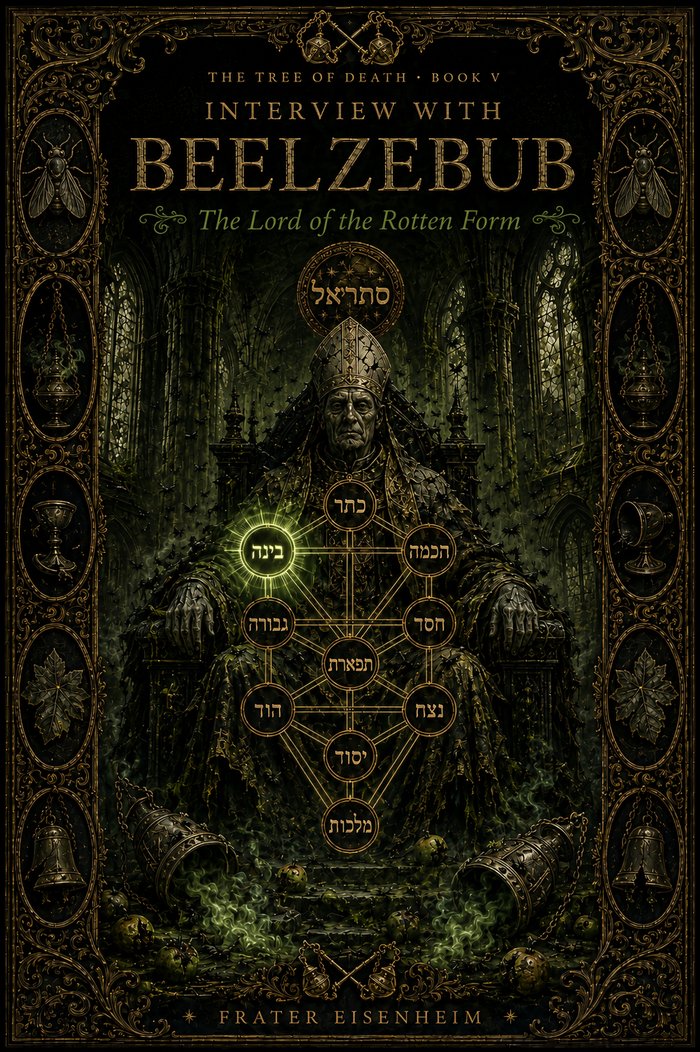
Beelzebub
The Lord of the Rotten Form
When form loses the life it was meant to guard, is it still a temple, or has it already become a sepulcher?
There is a temple submerged in time itself — columns cloaked in slime, stained-glass windows sealed by centuries of soot, books so waterlogged that the pages have become a single blind block, impossible to open. Reverence is not lacking there; life is. There dwells Satariel, those who conceal, the shadow of Binah, the great Mother who gives form to all that exists. The name this rotted motherhood takes, when it consents to speak, is Beelzebub — not the lord of the flies of the bestiaries, but the principle of every form that has lost the spirit and refuses to be buried.
In the fifth volume of The Tree of Death, Frater Eisenheim sits before the intelligence of the embalmer — the one that does not lie, does not accuse, does not charge, does not freeze: it preserves. Beelzebub offers neither power nor light; he offers the rotten peace of all that has already died and still stands, and calls that idolatry by the husk of faithfulness. Each answer he gives is an invitation to choose between two easy errors — to venerate the corpse or to set the house ablaze — while hiding the one true way out: the vessel is neither worshipped nor shattered; it is washed.
This is not a manual. It is a vessel — and what it keeps is the exact distance between the tradition that still burns and the one that only pretends to be alive.
Subscribe to read View the full seriesReading protected by subscription. Digital format (e-book).